


tldr;
A 12-year-old and his buddy built a working mobility device this week from free, open-source plans. No dad. No certified consultants. No SOW.
It worked for two reasons enterprise software almost never gets right: the documentation was good enough to follow, and the builders had the discipline to actually follow it.
Your implementation had an army of experts and you still can't take a vacation without the tenant catching fire. That's a first-things-first problem.
For the last week, I haven't been able to see my family room floor.
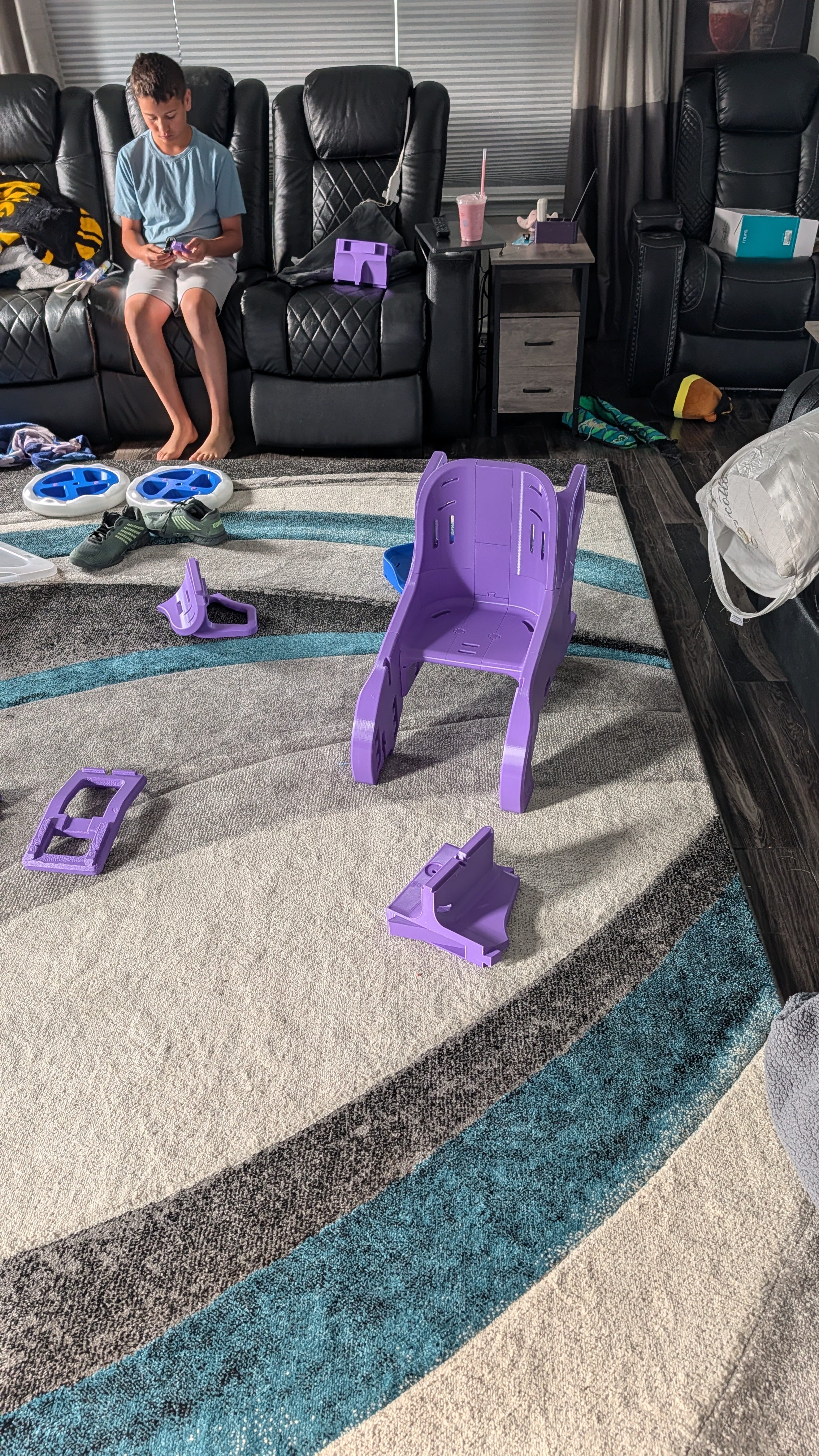
It's been covered in 3D-printed parts. Purple frame pieces. Blue wheels. A rubber mallet (don't ask). My son Justin and a friend have been assembling a TMT (a Toddler Mobility Trainer) that they printed downstairs in the basement.
It's an open-source device from a group called MakeGood. The idea is simple and kind of beautiful. They publish the plans for free, you print the parts on a consumer 3D printer, and you build a mobility trainer for a kid who needs one.
Theirs is going to a child at CHOP.
(Yes, I'm proud. I'm allowed one sentence. Moving on.)
Here's the part that's been rattling around in my head all week, because I can't turn this brain off:
Two kids built a working device, correctly, with no engineering degree between them. And the reason it worked is the exact reason most of our enterprise projects don't.
Reason one: the instructions were good enough.
MakeGood says the build takes "intermediate" 3D printing skill. Then they add that even beginners can do it "with a little patience."
Here's my read: A volunteer organization documented a physical mobility device so well that a sixth grader could assemble it from a set of plans.
Now think about your tenant.
It was built by an army of certified consultants. People with four-figure day rates and Workday Pro stacks longer than mine (going to need to be selective with those recerts this year). And you still can't tell me why the comp business process routes to that one approval step everybody's afraid to touch.
The difference isn't talent. MakeGood didn't have a bigger budget than your SI. The difference is that somebody did the unglamorous work of writing down the why, not just the what.
This is the Month 14 problem (shoutout Seena). The SI leaves you a config workbook that tells you what the switches are set to. It almost never tells you why. So the day the SOW expires, you inherit a machine you can operate but can't explain. And the first time the business asks for something new, you're reverse-engineering your own system.
A kids' 3D printing project shipped better build docs than that. Let it sting a little.
Reason two: they actually followed the directions.
Watching them work was the real lesson.
They didn't rush. When a piece didn't seat right, they didn't force it and move on. They stopped, checked the fit, figured out what was off, fixed it. Every piece had to fit perfectly before they'd go to the next step.
I have not seen that discipline on a project plan in years.
Because in our world, the piece doesn't fit, we know it doesn't fit, and we ship it anyway. The integration's flaky but the date's locked. The security model's a mess but go-live is Monday. The data's dirty but the steering committee wants a demo.
We force the piece. We move on. We call it Phase 2.
And then we act surprised when we're three releases behind, afraid to take PTO, and the only person who understands the build is the one person about to take a job somewhere else.
A twelve-year-old checked the fit before moving on. When's the last time your project did?
The first thing, first.
None of this is a knock on consultants or the platform. The platform is fine. The consultants are mostly good.
The point is that the boring stuff is the whole game. Document the why. Verify the fit before you move on. Don't force the piece because the calendar told you to.
A kid with a printer and a little patience can change a stranger's life. But only because somebody before him did the unsexy work of documenting it well enough to be followed.
That's the job. Most of us just forget it's the job.
— Mike
Director HR Tech | Reformed Piece-Forcer
P.S. If you've got a 3D printer collecting dust and a free weekend, MakeGood publishes everything for free at 3dmobility.org. Print one for a kid who needs it. (They recommend Bambu Lab printers, which means Justin finally has justification for the fleet in the basement. Jenn remains unconvinced.)
If you don't have a printer and still want to help, Justin is going to print a second chair. You can help here.
The Department of First Things First. For the people who do the work.